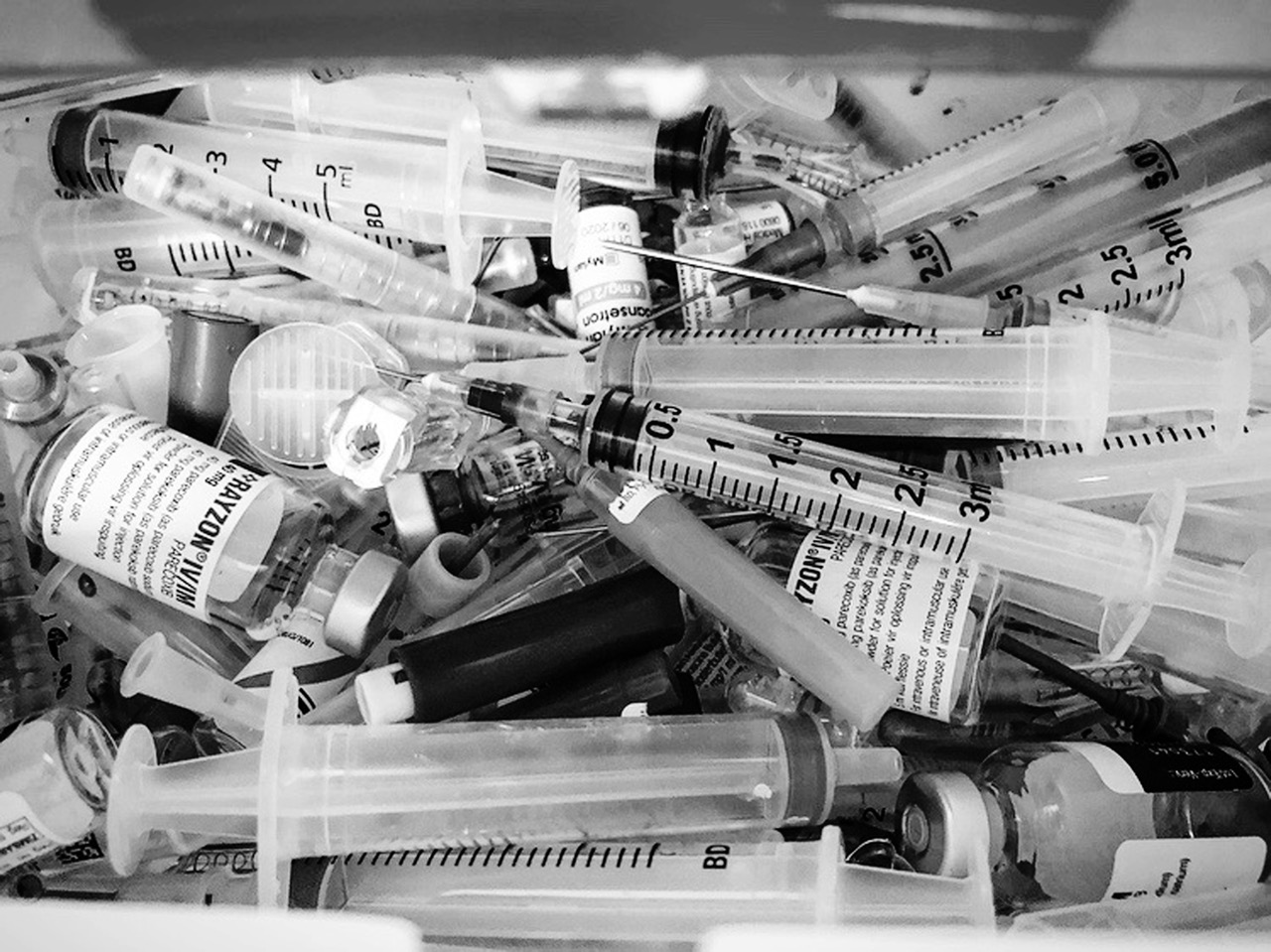
Most people don’t expect to encounter a used needle, contaminated dressing or other potentially infectious material during their working day. But for many workplaces, these hazards are a very real possibility.
Healthcare and aged-care workers may encounter sharps regularly, but they are certainly not the only people who need to understand the risks. Cleaners, first aiders, emergency responders, childcare workers, beauty professionals, tattooists, hospitality workers and others can all potentially come across sharps or materials contaminated with blood or other bodily fluids.
Knowing how to recognise these hazards — and what to do when you encounter them — is an important part of workplace health and safety.
A “sharp” is any object that can cut or puncture the skin and potentially cause an injury or exposure to infectious material.
Common examples include:
A discarded needle is an obvious example, but sharps can take many forms.
The danger is not simply the puncture wound itself. If a sharp has been contaminated with blood or another potentially infectious material, an injury can also create a pathway for harmful microorganisms to enter the body.
A sharps injury can happen very quickly.
A person may see a needle on the ground and instinctively reach down to remove it. A cleaner may accidentally pick up a contaminated item hidden among other rubbish. A first aider may be dealing with an injured person without immediately realising that a sharp is present.
The important point is that you cannot always tell whether a sharp is contaminated simply by looking at it.
Exposure to contaminated sharps can potentially result in transmission of blood-borne infections, including hepatitis B, hepatitis C and HIV.
This is why sharps should always be treated with caution.
This is one of the most important principles to remember.
Never use your bare hands to pick up a discarded needle, blade or other sharp object.
Even wearing disposable gloves does not make it safe to deliberately handle a sharp. Gloves can provide a barrier against contamination, but they do not guarantee protection from puncture injuries.
If a sharp is discovered, follow your workplace’s procedures and use the appropriate equipment and disposal method.
The safest approach is to avoid unnecessary handling altogether.
Sharps should be placed into an appropriate, approved sharps container designed specifically for that purpose.
Good sharps disposal practices include:
Sharps containers are designed to reduce the risk of puncture injuries during collection, handling and disposal.
The exact requirements for storage, transport and disposal can vary depending on the workplace and the type of waste involved, so appropriate workplace procedures should always be followed.
Infectious waste is material that may contain infectious microorganisms and therefore presents a potential risk of infection.
Depending on the workplace, this may include items such as:
Not every item that has come into contact with a person is automatically classified as infectious waste. The appropriate classification and disposal method depends on the material, the level of contamination and the relevant workplace and regulatory requirements.
The key principle is don’t take unnecessary risks with contaminated materials.
One of the simplest ways to reduce risk is to make sure waste is segregated correctly.
Contaminated materials should not simply be thrown into a general rubbish bin because it seems convenient.
Incorrect disposal can expose other people to the hazard — including cleaners, waste handlers, colleagues and members of the public.
Your workplace should have clear procedures identifying:
If you are unsure, stop and check the procedure rather than guessing.
If you accidentally suffer a needlestick or other sharps injury, don’t ignore it — even if the injury appears minor.
As a general first response:
1. Stop what you are doing.
Make the area safe and avoid further exposure.
2. Allow the wound to bleed gently if appropriate.
Do not aggressively squeeze or scrub the wound.
3. Wash the area thoroughly.
Use soap and running water.
4. Report the incident immediately.
Follow your workplace’s incident reporting procedure.
5. Seek appropriate medical assessment.
A healthcare professional can assess the exposure and determine what further treatment, testing or follow-up may be required.
If blood or potentially infectious material has entered the eyes, mouth or another mucous membrane, the area should be flushed appropriately and medical advice sought promptly.
The important message is simple: don’t assume that a small injury means a small risk.
Blood and other bodily fluids should be treated carefully.
If you encounter a blood spill, follow your workplace’s infection-control and spill-management procedures. Appropriate PPE should be used, and contaminated materials should be contained and disposed of correctly.
Avoid cleaning contaminated material with your bare hands.
And remember that the person cleaning the spill can be exposed to the same hazard as the person who initially encountered it.
You don’t need to work in a hospital to encounter these hazards.
Depending on the environment, relevant workers may include:
For some occupations, sharps and infectious waste are a routine part of the working environment. For others, the risk may be less frequent — but that doesn’t make it irrelevant.
In an emergency, the person providing assistance may be exposed to blood or bodily fluids without having time to prepare.
Good workplace training isn’t simply about ticking a box.
It’s about developing the knowledge and confidence to recognise a hazard and respond appropriately.
Understanding sharps and infectious waste forms part of a broader approach to infection control, workplace safety and first aid.
The more familiar you are with these situations before they happen, the easier it is to respond calmly and correctly when they do.
Sharps and infectious waste can present serious hazards, but many of the risks can be reduced through good procedures, appropriate equipment and proper training.
Remember the basics:
Recognise the hazard. Avoid unnecessary contact. Use the correct PPE. Dispose of sharps in the appropriate container. Keep contaminated waste separate. Follow your workplace procedures. Report exposure incidents immediately. Seek medical advice when required.
You don’t have to work in a hospital to encounter a needle, blood-contaminated material or another potentially infectious hazard.
Being prepared means knowing what to do before you need to do it.
At Mainstay Training, we provide practical training designed to give participants the knowledge and confidence to respond when it matters.
Our training includes First Aid, CPR, Advanced Resuscitation and Oxygen Therapy, along with other workplace and safety training.
If you’re responsible for workplace safety, updating your qualifications or simply want to be better prepared, get in touch with the Mainstay Training team to discuss your training requirements.
CONTACT

Mainstay Training
First Aid, CPR, Fire & Maritime Training
Airlie Beach & the Whitsundays, Queensland
Courses held at:
Mantra Club Croc
240 Shute Harbour Road
Cannonvale
QLD 4802
POSTAL ADDRESS
PO Box 890
Cannonvale
QLD 4802
AUSTRALIA
Phone: 0402 429 152
OUR PARTNERS


